Material
The work begins by testing line, weight and the behaviour of light. Glass, metal, paper, textiles, polymers and reclaimed elements each establish their own structural possibilities.
Process
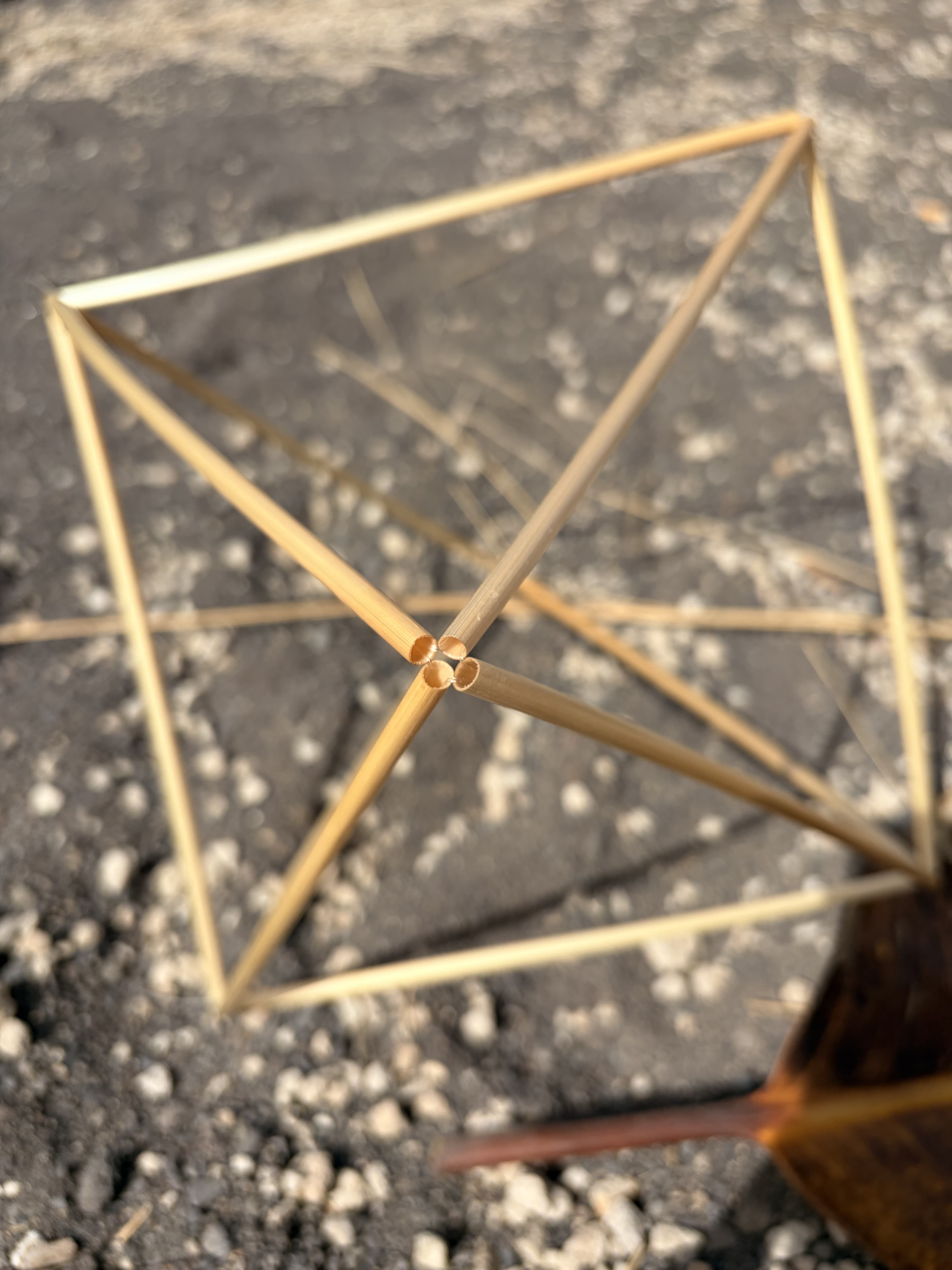
Pavuk.Studio develops through a sustained dialogue between material, geometry and light. Every work is assembled by hand; decisions about scale, balance and illumination evolve together.
Four stages
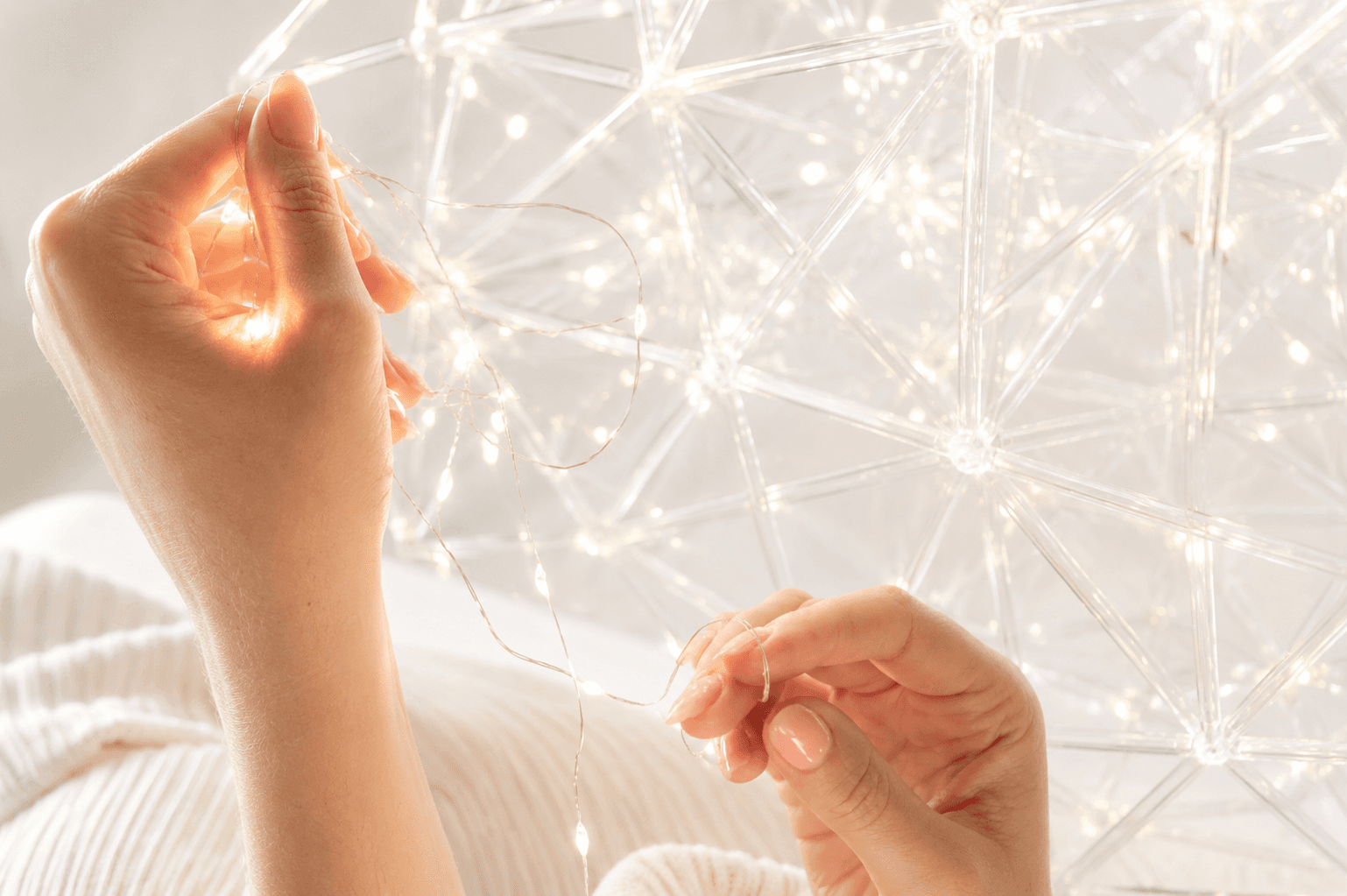
The work begins by testing line, weight and the behaviour of light. Glass, metal, paper, textiles, polymers and reclaimed elements each establish their own structural possibilities.
The modules are assembled by hand. Repetition, tension and balance create a spatial structure in which precision serves an internal rhythm rather than flawless uniformity.
LED light is integrated during construction, not added as decoration at the end. It determines depth, emphasis and the way the form reveals itself to the viewer.
Scale, suspension height and the direction of light respond to each site. The aim is to find the precise distance between sculpture, architecture and viewer.
Process
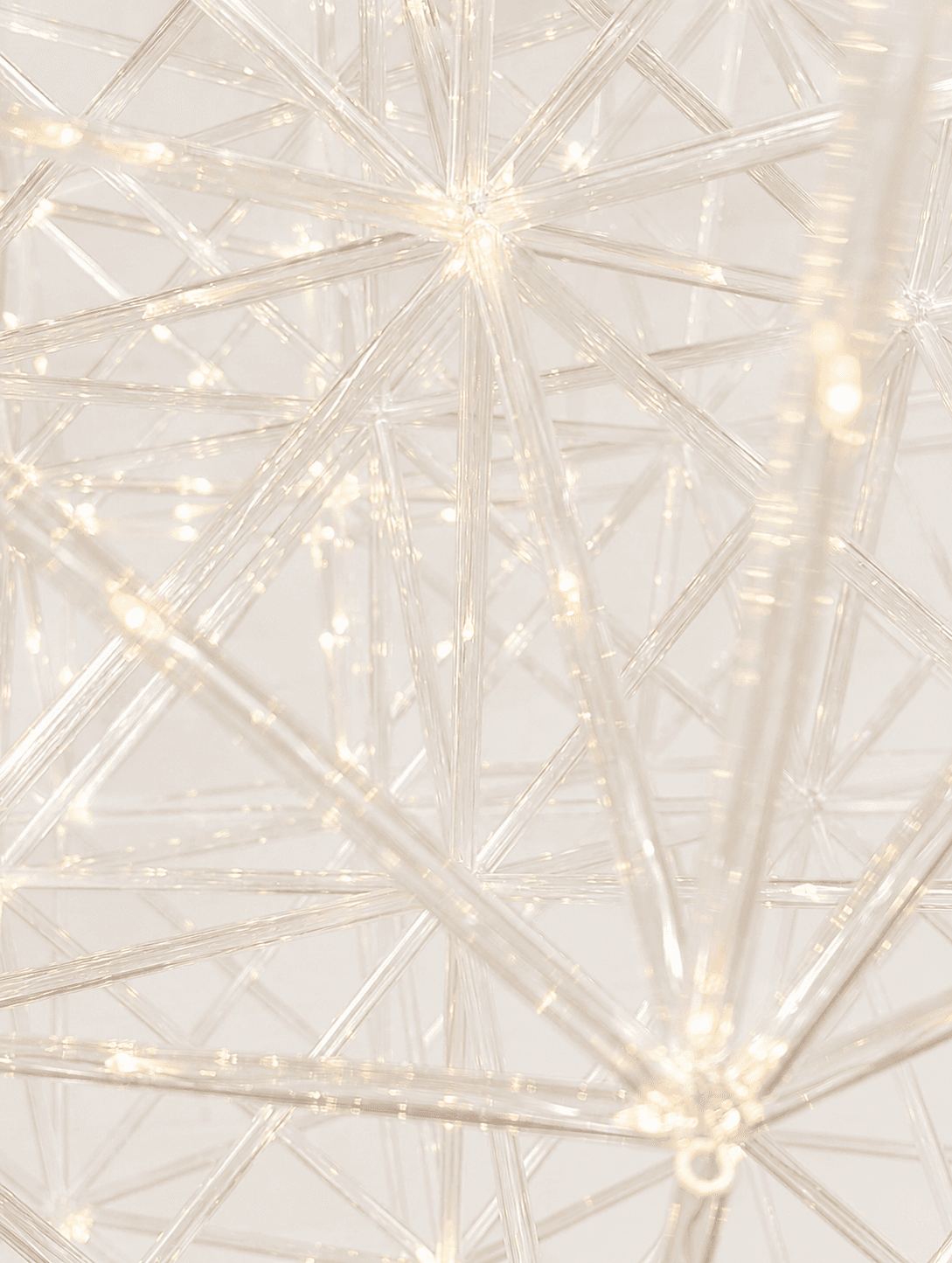
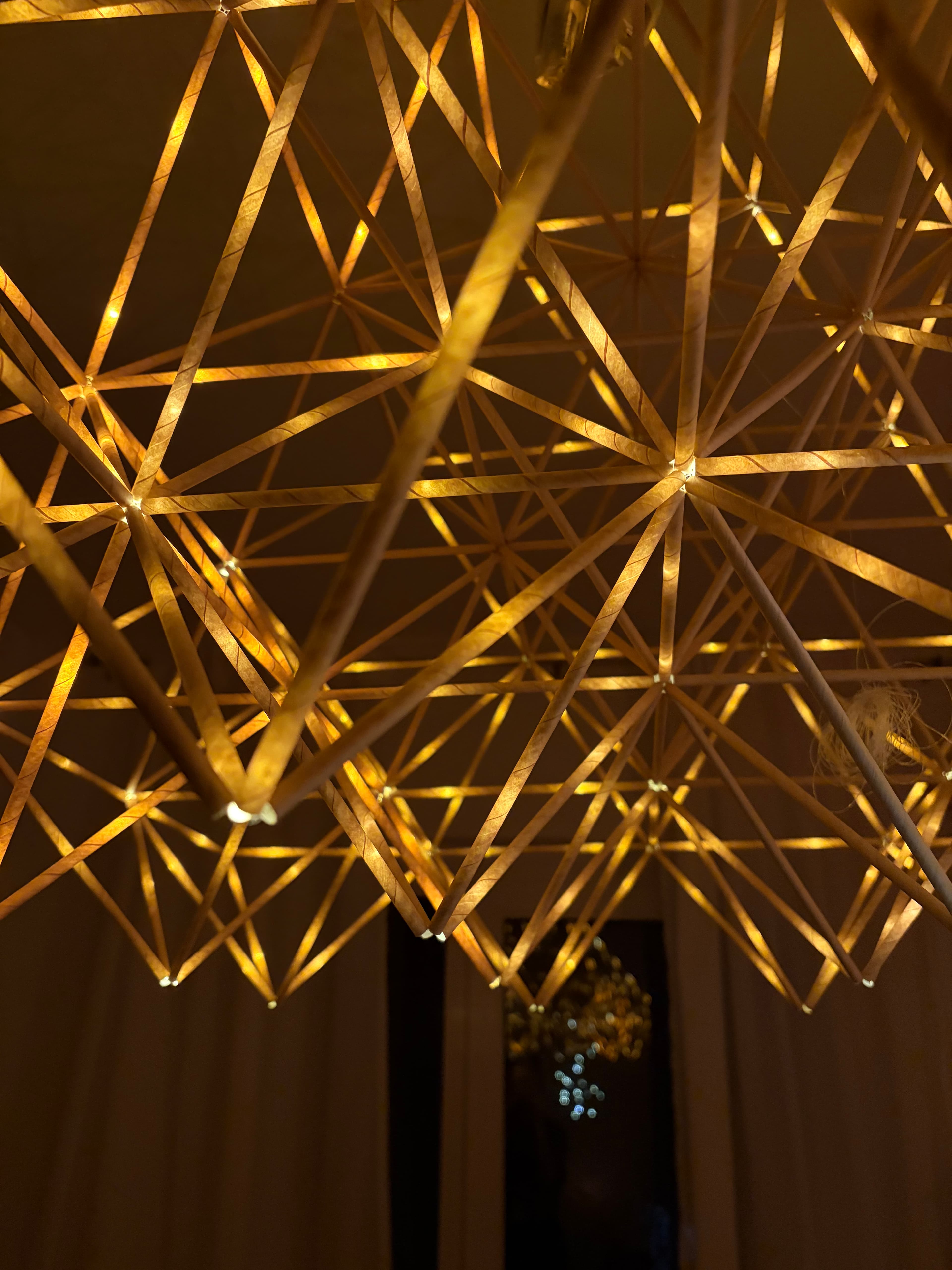
The same geometric system acquires a different voice each time. Material remains visible: its weight, texture and capacity to transmit or reflect light become part of the work.
The process ends not when the final module is assembled, but when light, form and space begin to act as a single whole.
View the works